Notes on the Rhône, Beaujolais, Burgundy, Bordeaux, Champagne, the Loire – and beyond.

When I started this little wine-reviewing experiment in January, I really had no idea where it would take me. Now, wrapping the last one of the year, I admittedly have mixed feelings. Some months, I was so short on time that I actively avoided opening a new-to-me bottle of French wine so that I wouldn’t have to review it. Other months, creative energy came in massive waves to the point where my entire notes app on my phone was nothing but stream-of-consciousness wine reviews (and to-do lists I hadn’t yet gotten to). A lot of PR firms took notice and my tiny wine fridge is bursting at the seams. I accepted far more wine than I could possibly drink in a month – or six. But generally speaking, I feel the experiment paid off. It gave me the drive and commitment I needed to keep posting, to keep reviewing, and to keep going – particularly at times where everything else in my life felt like it was falling apart.
I might write a wrap-up post on my wild year in a separate article or Instagram post, but what I learned more than anything is that the situational context you enjoy a given wine in is – well, pretty much – everything, and that’s where I feel some critics have gotten it wrong. Enjoying a wine at dinner with friends will give you a completely different set of memories linked to taste and smell than in a cold, sterile tasting room because someone’s asked you to taste the wine without food, laughter, or warmth. I don’t think I’m a perfect reviewer or writer by any means, but I do think one of the reasons wine isn’t doing so well is that we have all but removed the fun and the vibe and the je ne sais quoi moments from wine tasting – and people can feel that.
So, santé to all of you who hung on through my weird experiment. I’m still not wholly sure if I’ll be continuing it for another year – but until then, here’s what I drank in December.
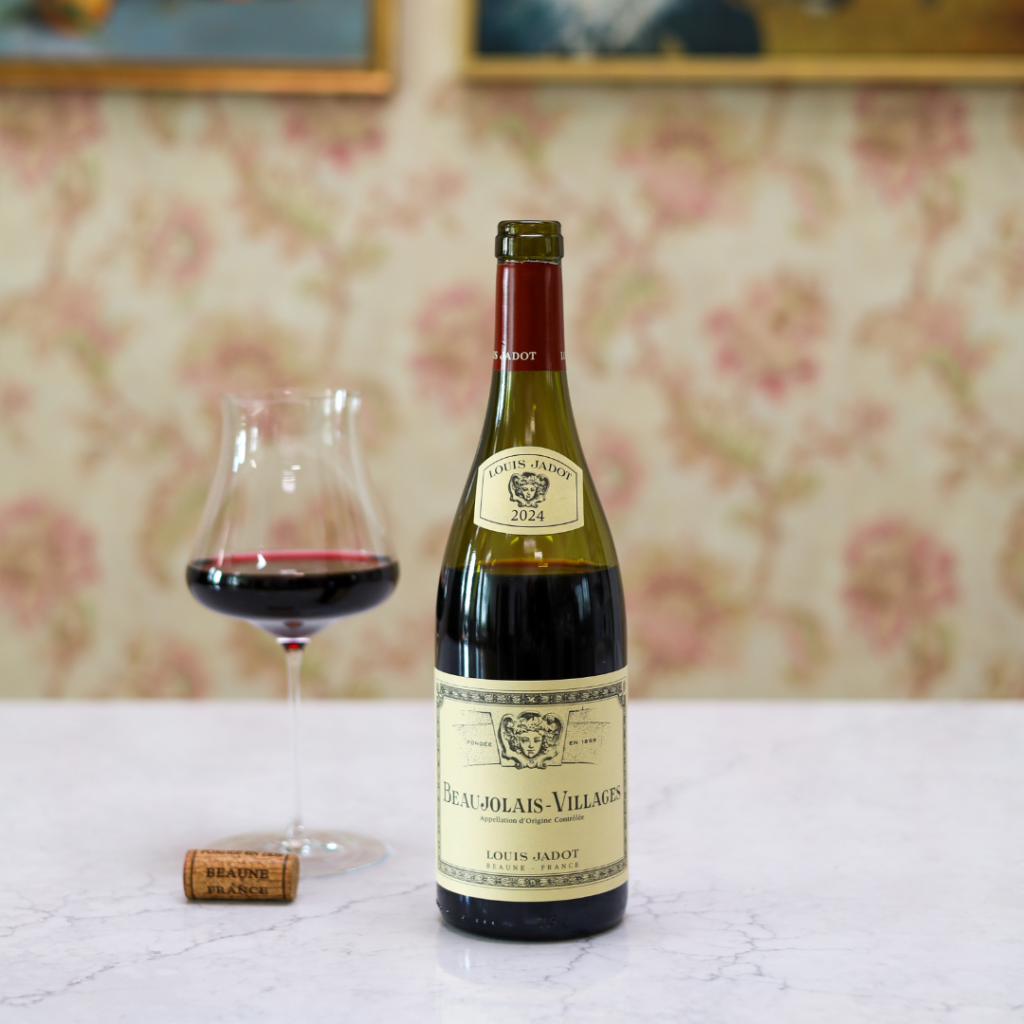
WINE #1: Beaujolais-Villages, Louis Jadot, 2024 (16.5/20, Wine.com)
Where I had it: With a turkey leftover sandwich after Thanksgiving. Chinon is generally my go-to pairing for a good leftover sandwich but we had a bottle of this already open and gave it a shot. What a great one! So fun and easy.
How much a bottle cost me: $0. This was part of a paid partnership I did this month with @lovejadot on Instagram.
How much a bottle would cost you: $18.
OVERALL COMPOSITE SCORE: 16.5/20
- DRINKABILITY SCORE: 3.5/5 – It’s just simple and I have zero qualms about endorsing a wine that is. Sometimes you just need something easy – and if you’re starting out on your wine journey, Jadot is a great place to go to try different wine styles and explore. Indeed, I have nothing but fond memories of drinking Jadot’s Beaujolais and Beaujolais-Villages on study abroad in Paris and will always return for the nostalgia factor – if nothing else!
- PAIRABILITY SCORE: 4/5 – So good with pizza. We can talk all day about Chianti being the ideal pizza wine, and I get it, but there really is something about Beaujolais-Villages that hits the spot here. Like pizza, it’s not trying too hard. It’s just damn good. Fruity flavors align easily – especially if you’re pairing with a red sauce or vodka sauce pie. Yum.
- WALLET-ABILITY SCORE: 5/5 – $18 is a great price for Beaujolais-Villages these days. One thing I do enjoy about the entry level Jadot wines is that they remain accessible time after time, store to store. We see you and we appreciate it!
- THE X FACTOR SCORE: 4/5 – Louis Jadot announced in 2024 that it had gained organic certification for wines made from grapes on their owned parcels, and that they were pushing their growers to adhere to stricter environmental standards moving forward. It’s been tough to be organic and even tougher to be biodynamic in Burgundy, but for Jadot – which is one of the largest producers in the region – this was not a small step. Much more can be done, but it is a good start.
WINE #2: Bordeaux Blanc, Pessac-Léognan, Château Tour Léognan, 2023 (16.5/20, K&L Wine Merchants)
Where I had it: With friends one chilly evening at La Compagnie des Vins Surnaturels on Centre Street. La Compagnie has been my go-to wine bar for years and their constantly evolving list keeps things fun and interesting.
How much a glass cost me: $21.
How much a bottle would cost you: $20.
OVERALL COMPOSITE SCORE: 16.5/20
- DRINKABILITY SCORE: 4/5 – This is a textbook modern white Bordeaux. No oak, fresh and fruit-forward. Made predominantly of Sauvignon Blanc, this one’s got a zesty, citrus attack with ripe pineapple underneath at the finish. Fun and easy and doesn’t take itself too seriously.
- PAIRABILITY SCORE: 3.5/5 – I didn’t pair this one with a proper plate of food, but I did get some salted cashews at the bar as I started to finish the glass. Decent. This wine would pair well with all kinds of salads and summer appetizers. Nothing too crazy but I’ll give it 3.5 points for the light versatility.
- WALLET-ABILITY SCORE: 5/5 – $20 for a good bottle of easy drinking white Bordeaux is a pretty good price, particularly when you consider that the pedigree of the house (as the second label of Château Carbonnieux), tariffs and *gestures broadly* everything that happened to Bordeaux and wine in general in 2025. Any easy one to stock up on for the summer months, that’s for sure.
- THE X FACTOR SCORE: 4/5 – Château Carbonnieux has a number of eco-certifications under its belt, like HVE and the Environmental Management System. The latter covers all that isn’t the vineyard, while the first – coupled with a concentrated plot they’re currently farming organically – is everything that is the vineyard. A lot more can be done here, but what I appreciate most is that they’re not just focused on the vines, but their offices and the humans that work for them, too. Four points is thus awarded, with the hope that more will come.
WINE #3: Connétable, Saint-Julien, Château Talbot, 2020 (16/20, Millésima)
Where I had it: With my husband that same chilly evening at La Compagnie des Vins Surnaturels on Centre Street. My friends had to leave after a glass but my husband and I were headed to dinner a little later, so to kill another hour he joined me. We split this little half bottle open together to pass the time.
How much a half-bottle cost me: $50. Ouch. Pricey for a half bottle but this was off the list, and when the somm on duty heard I’d spent the summer in Bordeaux and that my husband loved strong cozy reds, the choice was clear. Still, I wished it was at a better price.
How much a bottle would cost you: $27. Now that one’s not bad for a 4th growth Bordeaux, even if it is their “second” wine. (My God how I abhor this system. Lots of things are changing in Bordeaux and I hope these “second wine” traditions go with it.) That being said, I was only able to find in-stock versions stateside on Millésima in large format – linked above.
OVERALL COMPOSITE SCORE: 16/20
- DRINKABILITY SCORE: 3.5/5 – While some of the world’s most popular critics have lauded classic red Bordeaux their entire lifetimes, I know for a fact they are not my favorite. This is one such classic: layered, with notes of blackberries, cigar smoke, and a touch of pepper. It felt heavy on the night we tasted it – like it needed something to lift it up and out of the incoming winter doldrums. While my husband enjoyed it, it wasn’t his favorite either. I’m not sure I can award it more than three and a half points in this category.
- PAIRABILITY SCORE: 4/5 – Drinkability on its own being noted, I do feel this is a wine that would come alive with food. It needs something grilled or stewed with beef and mushrooms to really bring it to life. I’ll give it four points with the hope that it does.
- WALLET-ABILITY SCORE: 5/5 – While I certainly overpaid for this wine, a half bottle – or even a full bottle of it – is available at a pretty good price. If you’re a fan of classic red Bordeaux and love the traditional houses, this is a wine for you.
- THE X FACTOR SCORE: 3.5/5 – There’s a lot of discussion on Château Talbot’s website about HVE3 certification, bee-friendly certifications, and general preservation of biodiversity, but I firmly believe a lot more can and should be done here (or at the very least, additional transparency might be appreciated). Seems like everyone in Bordeaux has the HVE3 certification as it’s fairly easy to get (versus organic or biodynamic which sometimes take a decade to convert and take an additional 3-5 years for certification). As a leading house in the region, I think they can do a lot more here, so they’ll stay at three and a half.
WINE #4: Les Meysonniers, Crozes-Hermitage, M. Chapoutier, 2023 (17.5/20, Saratoga Wine)
Where I had it: At a private wine dinner put on by my friend Ryan (@cellarboss) in Manhattan. He and his friend, Chef Matt Wasson, have launched a dinner series called “Off the List” where they takeover a small rental space and sell tickets for up to ~25 strangers to sit around a table together and meet, talk, laugh, and enjoy good food and wine. It’s a great idea and we had a lovely time.
How much a glass cost me: $0.
How much a bottle would cost you: $45. For the pretty wine that it is, this is a nice price!
OVERALL COMPOSITE SCORE: 17.5/20
- DRINKABILITY SCORE: 4.5/5 – I’ll be the first to admit that I often struggle with Rhône reds. They’re often too tannic, too salty, too heavy for my tastes (the same issue I’ve had with classic Bordeaux reds rings true here – to a degree), but Les Meysonniers is a whole new breed of northern Rhône cru. Soft and elegant, with notes of red berries like crunchy cranberry, this was my favorite wine of the night. There was something herbal and green about it in there that was unexpected and added a unique layer to every sip. This is a wine that I’ll be looking for again, that’s for sure.
- PAIRABILITY SCORE: 4/5 – It was a pretty little match with the mushroom and cream sauce papardelle but I think what this wine really needs to come alive is a risotto with cruciferous vegetables like roasted broccoli to even out those little green notes. Either way, the pairing opportunities here really are endless. I’ll have to experiment the next time I bring a bottle home.
- WALLET-ABILITY SCORE: 5/5 – While I wish this wine could go for something like $35 instead of $45, I do still think this is a great price for the caliber of the wine you’re getting. Its medium body makes it a crowd-pleaser at a good price for 2025. Equal parts affordable but at just the right price to justify holding for a little occasion as well.
- THE X FACTOR SCORE: 4/5 – Chapoutier is certified organic and has been applying the principles of biodynamics since the 90s (when it was still somewhat rare in certain areas of France and certainly in the Rhône). A trailblazer in the field for many reasons, Chapoutier’s commitment to doing right by people and terroir at scale is admirable. While this specific wine is not certified biodynamic, it is certified organic, and Chapoutier makes gains every year in the certification area. More good things will certainly be coming here.
WINE #5: Banyuls, M. Chapoutier, 2012 (17.5/20, Spirited Wines)
Where I had it: At that same private wine dinner in Manhattan.
How much a glass cost me: $0.
How much a bottle would cost you: $35.
OVERALL COMPOSITE SCORE: 17.5/20
- DRINKABILITY SCORE: 3.5/5 – On its own, Banyuls can come off a little too sweet, but it’s one of those situational wines. It’s better with food and better in small doses after a long meal. This one was a bit too cloying on its own, but when paired with that dark chocolate dessert with the raspberries it came absolutely alive. Think dark cherries confit with a little bit of tart and a little bit of tannin. Generally, a delight.
- PAIRABILITY SCORE: 4.5/5 – Banyuls is, quite frankly, one of the world’s most unsung heroes of dessert pairing. Anything that contains dark chocolate and raspberries or strawberries is going to change your life. That evening, it was paired with a dark chocolate and raspberry cake with caramel on the side. The caramel threw me off a little bit as I don’t find it works with Banyuls, but it was incredible with the cake. If you’re throwing a dinner party and your dessert contains chocolate and raspberries, pick up a bottle of Banyuls – even if your friends insist they “don’t like sweet wines”. This will rock their world.
- WALLET-ABILITY SCORE: 5/5 – Honestly, for what this bottle can offer you at the end of the meal, $35 for some aged Banyuls is a good price. I did have a little trouble finding this stateside, given that sweet wines are not in line with general consumer taste at the moment, but like I said – if you’re planning a dinner party with a dessert, this one is well worth the price.
- THE X FACTOR SCORE: 4.5/5 – Applying the same score here that was applied to the wine just above as they’re from the same house.
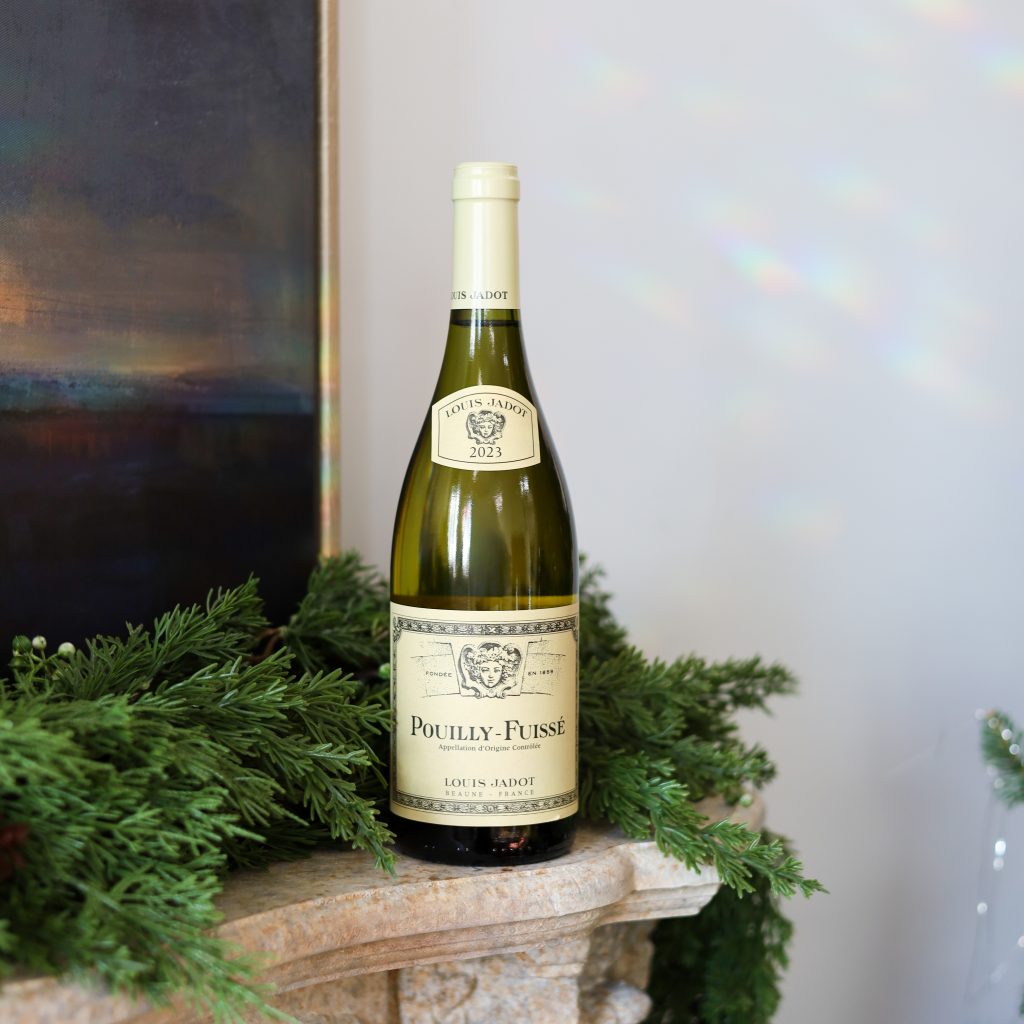
WINE #6: Pouilly-Fuissé, Louis Jadot, 2023 (16/20, Empire Wine)
Where I had it: With popcorn on movie night with my husband.
How much a bottle cost me: $0. This was part of a paid partnership I did this month with @lovejadot on Instagram.
How much a bottle would cost you: $27
OVERALL COMPOSITE SCORE: 16/20
- DRINKABILITY SCORE: 3.5/5 – Pouilly-Fuissé is having a moment and Louis Jadot is riding the wave. This one has a lovely combination of hazelnut, dried lemon, and a touch of an oaky, woody aroma.
- PAIRABILITY SCORE: 4/5 – This, and Jadot’s Mâcon-Villages are the G.O.A.T.s of white cheddar popcorn pairings. They just are. They work every time. It’s my guilty pleasure indulgence and it never disappoints. That being said, it’s a unique flavor profile so it won’t work with every other snack in the world but it’s a winner with that one.
- WALLET-ABILITY SCORE: 4.5/5 – A bit pricier than the Beaujolais-Villages I reviewed above, but still a good price for an appellation on the up and up.
- THE X FACTOR SCORE: 4/5 – As with the first Jadot, more can be done here but they’re doing a great job as a large house.
WINE #7: Anjou Rouge, Domaine du Petit Clocher, 2023 (16/20)
Where I had it: At home on a Friday night to toast to the start of the weekend.
How much a botle cost me: $0. This was a sample I received as a take-home bottle from a press event with Loire Valley Wines a few months back.
How much a bottle would cost you: $15 – but it has proven difficult to source stateside at the moment. I was able to source the 2022 via K&L Wine Merchants, but haven’t been able to find the 2023.
OVERALL COMPOSITE SCORE: 16/20
- DRINKABILITY SCORE: 4/5 – Berries and spice. Cinnamon. A touch of something a little salty. This is a wine that would be great at Christmas dinner. We enjoyed it without food, but it was pretty, complex, and went down a little too easy. For $15, I’d buy at least half a case. Here’s hoping it becomes available stateside soon.
- PAIRABILITY SCORE: 4/5 – We didn’t eat it with food and that was our mistake! This one would certainly come alive at a holiday meal or honestly… even with pizza. The layers make it pretty much up for anything while keeping a soft texture that’s delightful to enjoy.
- WALLET-ABILITY SCORE: 4/5 – $15 is pretty unbeatable for a great wine like this one, but the fact it’s not easily available stateside means it loses a point. Here’s hoping someone restocks or starts importing it soon!
- THE X FACTOR SCORE: 4/5 – This is an independent winemaker run by a family in its forth generation of winemaking savoir-faire. From what I could glean on their website and tech sheets, they’re generally practicing organic but aren’t certified, and they do have a strong commitment to biodiversity. There’s a lot more that can be done but it is a good start – particularly in a place like Layon, where humidity near the river can easily cause mildew and other diseases.
WINE #8: Héritage, Brut Champagne, Laurent-Perrier NV (14.5/20, Wine.com)
Where I had it: I brought this bottle with me to Dileiny Baron‘s Holiday Party at The Creator’s Loft, a lifestyle photoshoot space in Jersey City. If you’re an influencer or content creator based in Jersey City or Hoboken, I can’t remember this space enough! It’s been a great way for me to make content this year and I’m so glad I met Dileiny!
How much a bottle cost me: $0. I received this as a sample.
How much a bottle would cost you: $119.
OVERALL COMPOSITE SCORE: 14.5/20
- DRINKABILITY SCORE: 4/5 – This is a textured, layered, complex Champagne. Mineral-driven, with additional notes of lemon and unripe lime. The finish is reminiscent of the last bite of a croissant – a croissant that’s a little overbaked and browned; almost burned. Nutty and unctuous. That being said, I found these bubbles very aggressive (to the point where I actually sneezed when I gave it a whiff – it felt like more than a few jumped up into my nose). I had to wait quite a while for the bubbles to calm down, and only then could I taste the notes underneath. I give it four stars for those endless notes but the texture initially threw me off (and I originally wanted to give it 3.5 here).
- PAIRABILITY SCORE: 4.5/5 – Champagne’s greatest strength as a category is its endless food pairing possibilities. We drank this one with a wide variety of appetizers and it was lovely with all of them. I have no doubt this Champagne could carry itself well throughout an entire meal and into nightcap territory.
- WALLET-ABILITY SCORE: 3/5 – Given the bubbles and harsh texture I encountered at first sip, this wine – for me – is not worth $119. I’m not sure I could shell that much out for a Champagne that hasn’t quite won me over, particularly when I know that I could get others I do prefer at a better price point. I know this is a little controversial to say, as Héritage is one of LP’s most “prestige” cuvées, but I’d be hard pressed to spend over $70 for this bottle. If you know you love this cuvée, though, it could be worth it for you.
- THE X FACTOR SCORE: 3/5 – I hold big houses to a higher standard across the board, and I found the messaging on the website pretty vague here, buried on a page you really have to look for to find. Sure, there’s an HVE certification note (it doesn’t mention which level) and there’s a Sustainable Champagne Vineyards Certification note, but there’s nothing on CSR or anything specific about which vineyards have what, nor does it list future goals for the house. I’m not convinced. A lot more can be done.
WINE #9: Le Black Création Brut, Champagne Lanson, NV (17/20, Wine.com)
Where I had it: At a family Christmas Eve dinner, paired with our classic tradition of sautéed sea scallops.
How much a bottle cost me and would cost you: $54.
OVERALL COMPOSITE SCORE:
- DRINKABILITY SCORE: 4/5 – Steely. Metallic. Lemon. Austere. Long finish with a trademark level of acidity. The mingling of it all made it a delicious wine for Christmas Eve dinner. The bubbles were not as soft and delectable as I prefer, but this is a solid Champagne.
- PAIRABILITY SCORE: 4/5 – Excellent with sea scallops. Thanks to those beautiful, mineral tasting notes, it was an absolutely lovely pairing that didn’t weigh one to the other down. This one would be great with a variety of seafoods, salads, or cold appetizers.
- WALLET-ABILITY SCORE: 4.5/5 – A Champagne at this price – particularly one that’s of good quality, and readily available in Publix of all places (it’s the only wine shop within an hour’s radius of my mom’s house) is pretty impressive.
- THE X FACTOR SCORE: 4.5/5 – Champagne Lanson’s transparency on its Corporate Social Responsibility values is among the most impressive I have ever seen from any domaine I’ve reviewed this year. Their website alone provides a to-the-point Gender Equality Index that holds them accountable against their goal of full gender equality, in addition to a landing page that details all their environmental, corporate, and social responsibility engagements. This is what I’ve been looking for from many other large houses and I’m so pleased I’ve found it with Lanson. In addition to all these efforts, Lanson is the owner of one of Champagne’s largest organically grown vineyards (Domaine de la Malmaison), and claims that 100% of its owned vineyards have at least one certification, whether HVE or organic. As always – more can be done. But if anyone is setting the gold standard for what the industry should be striving for, it’s Lanson. Bravo.
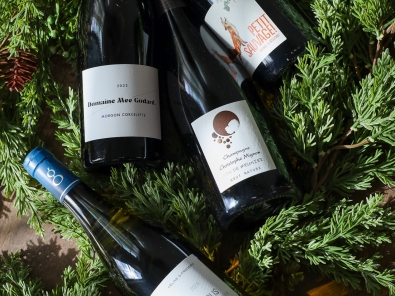
This month’s reviews might be shorter than you would originally think, given it was peak the holiday timing! Indeed, I did open a few bottles for Christmas and New Year’s that I’ve already reviewed – like Pierre & Antonin’s Petit Sauvage Rouge first discovered in the May reviews, and Chablis Gueguen as well as Christophe Mignon’s ADN de Meunier from the August reviews.
Looking for more wine reviews? Check out the November Edition or my methodology post on Unfined + Unfiltered. Enjoy, santé !